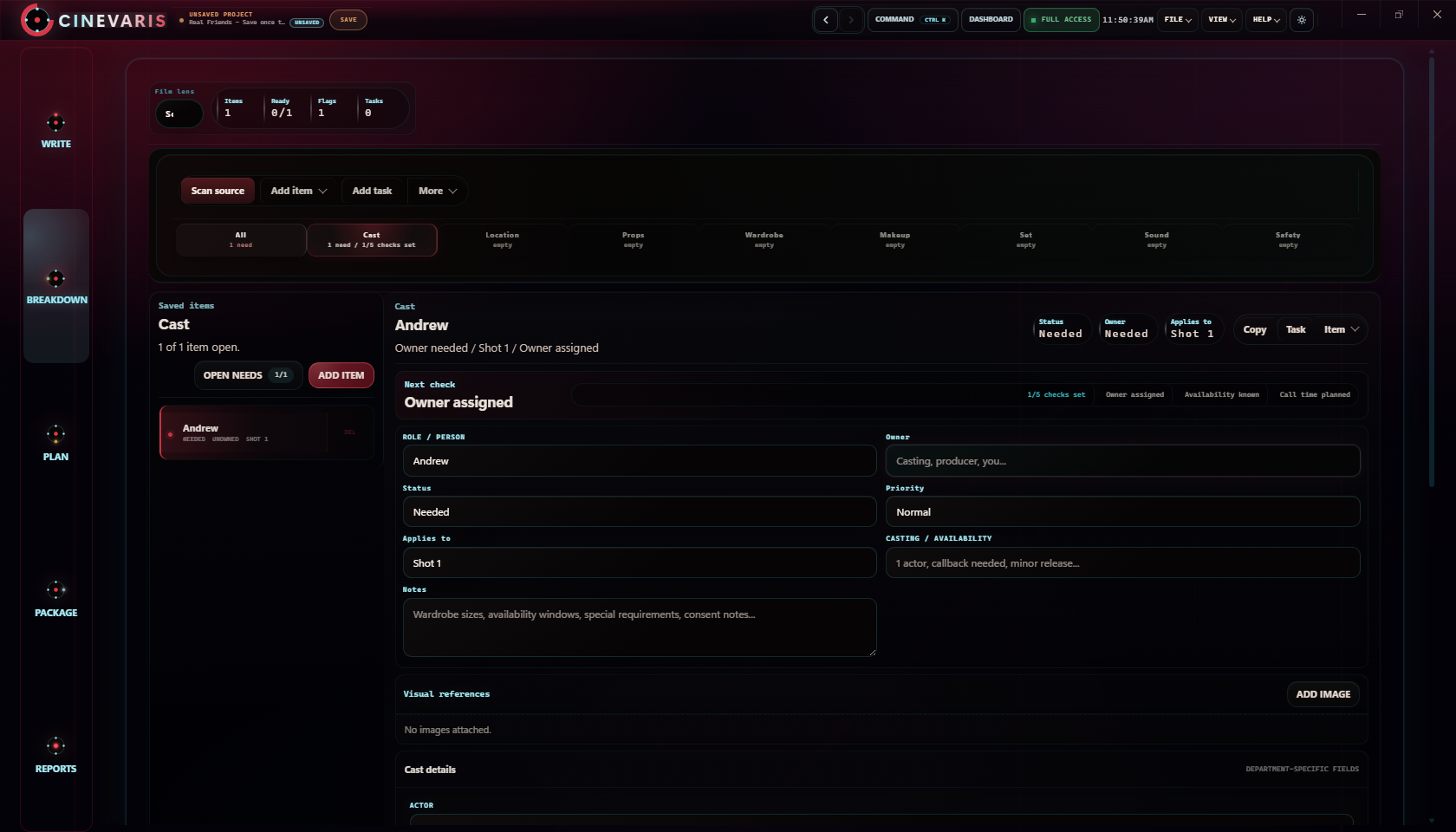
What a useful breakdown should track
The point is not to mark up a script for its own sake. The point is to make decisions easier for scheduling, department prep, location planning, and shot design. A strong breakdown keeps creative intent and practical requirements attached to the same scene.
Scene basics
Scene number, page count, time of day, interior or exterior, location, story day, and short scene purpose.
People
Speaking roles, background, doubles, stand-ins, minors, special skills, and any approval or scheduling notes.
Physical needs
Props, wardrobe, makeup, vehicles, set dressing, practical effects, picture vehicles, animals, food, and hero objects.
Production risk
Weather, stunts, weapons, intimacy, minors, water, fire, night work, company moves, and anything that needs extra prep.
A simple breakdown workflow
- Read the scene once for story before marking anything.
- Mark only what the camera or production team actually needs.
- Group notes by department so nothing lives only in your head.
- Flag risk early instead of burying it in a general note.
- Review the breakdown against schedule, location, and shot planning before locking it.
Scene breakdown template
Use this as a practical starting point. A useful version is one your team can scan quickly during prep, not one with the most fields.
Common mistakes to avoid
- Treating a breakdown like a shopping list instead of a production risk map.
- Marking every object mentioned in dialogue, even when it never appears on screen.
- Waiting until scheduling to discover that one scene needs six departments involved.
- Keeping continuity notes separate from the scene breakdown.
- Using vague notes like "special setup" without naming the actual constraint.
Keep breakdowns connected to the rest of pre-production.
Cinevaris is being built so script, scene, shot, department, and production notes stay connected instead of scattering across separate documents.