What a useful shot list should track
A strong shot list connects creative intent to practical execution. It should help the director, DP, AD, producer, script supervisor, and department heads understand what matters most before the day starts.
Story purpose
What the shot needs to reveal, turn, hide, clarify, or emphasize inside the scene.
Frame and movement
Shot size, angle, lens intent, camera movement, subject priority, and visual continuity.
Coverage plan
Master shots, singles, inserts, reaction shots, transitions, pickups, and alternate versions.
Production logistics
Setup difficulty, location constraints, lighting needs, sound concerns, safety notes, and time risk.
A practical shot planning workflow
- Start from the scene objective, not from camera moves.
- Plan the minimum coverage needed to make the scene edit clearly.
- Mark shots that depend on props, effects, stunts, weather, vehicles, or company moves.
- Separate must-have shots from nice-to-have shots before the shoot day.
- Review the list with schedule, location, and department constraints in mind.
Shot list template
Keep the list compact enough to use under pressure. A shot list is useful when the team can scan it quickly and still understand the scene priorities.
Common mistakes to avoid
- Listing camera moves before knowing what each shot needs to do for the story.
- Building a beautiful list that is impossible to shoot with the available time.
- Treating inserts and reaction shots as optional until the edit needs them.
- Forgetting sound, lighting, safety, and reset notes when a shot looks simple on paper.
- Using vague priorities instead of clearly marking the shots that protect the scene.
Plan shots with the rest of production in view.
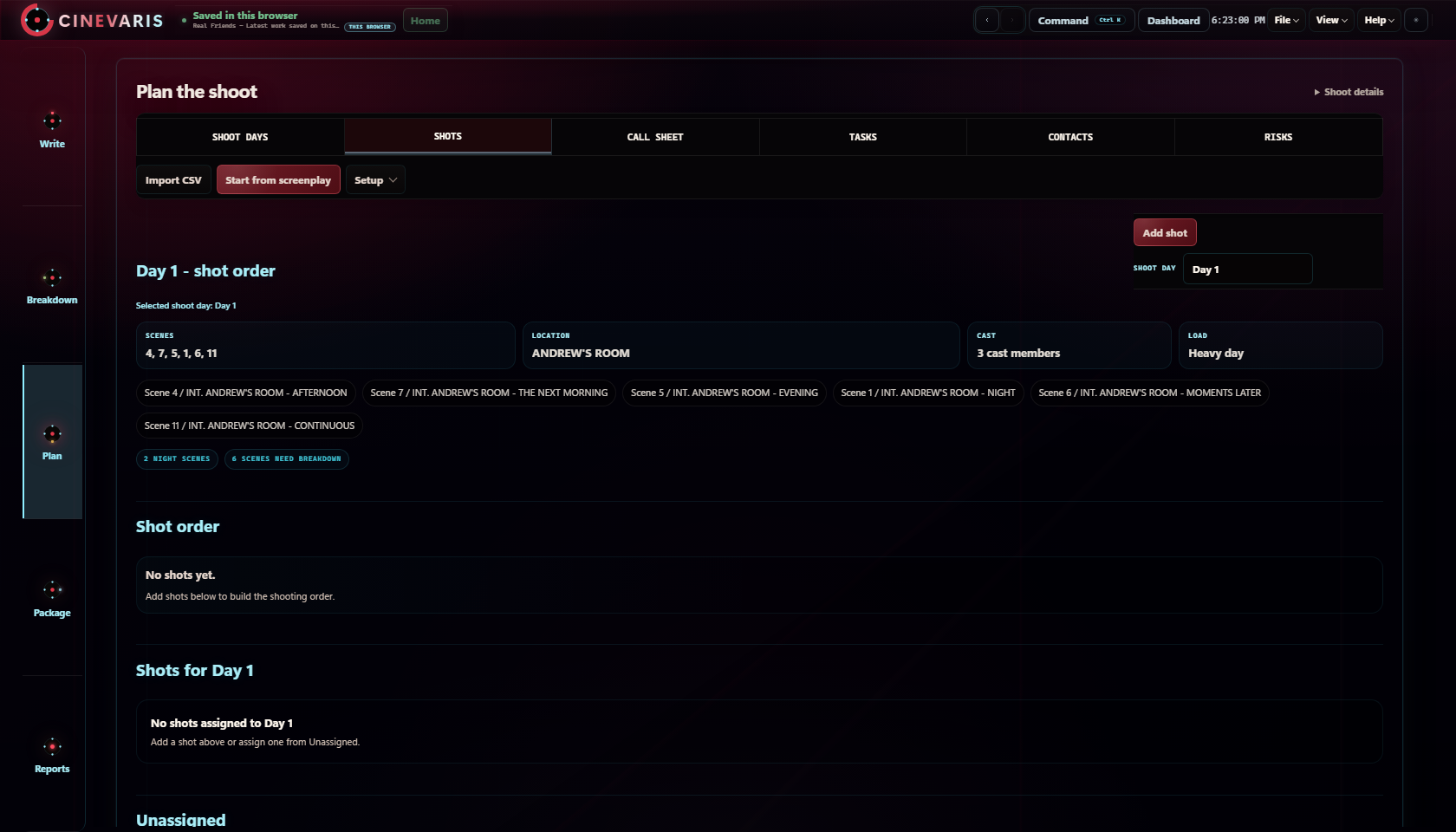
Cinevaris is being built so scene context, shot planning, department notes, schedule pressure, and production risk can stay connected in one workspace.