What the checklist should protect
Indie production breaks down when invisible assumptions stay invisible. A useful checklist makes scope, responsibility, risk, and handoff visible before the team is already on set.
Story and script
Locked draft, scene numbers, page count, story days, open questions, and any scenes that still carry creative risk.
Schedule and locations
Shoot days, company moves, location access, weather exposure, permits, parking, holding, restrooms, and backup plans.
People and departments
Cast, crew, background, department leads, special skills, call times, contact info, and ownership for each open task.
Safety and handoff
Stunts, weapons, minors, vehicles, intimacy, weather, sound risks, continuity needs, post notes, and delivery requirements.
Use it at the right moments
Before money is committed
- Confirm the script scope matches the budget, crew size, and available shoot days.
- Mark scenes that depend on unusual locations, vehicles, stunts, weather, crowds, or night work.
- Decide which scenes are essential and which can be simplified if the schedule gets tight.
- Create a first risk list before locking locations or paying deposits.
Before scheduling
- Break down every scene for cast, location, props, wardrobe, sound, safety, and department needs.
- Group scenes by location, story day, time of day, and production difficulty.
- Separate must-have shots and scenes from nice-to-have coverage.
- Flag any scene that cannot be scheduled until a question is answered.
Before the shoot
- Confirm cast, crew, call sheets, location contacts, parking, meals, releases, and emergency contacts.
- Check props, wardrobe, makeup, picture vehicles, reset needs, and continuity states.
- Walk through sound risks, power, lighting, weather, safety, and backup locations.
- Make sure every department knows what must be ready on day one.
Before wrap and post
- Track pickups, missing inserts, sound notes, continuity gaps, and shots that protect the edit.
- Confirm media backup, file naming, script notes, release forms, and production reports.
- Collect music, artwork, screen content, credits, and clearance questions before they disappear.
- Write the handoff notes a post team would need even if you are editing the project yourself.
Indie production checklist
Treat this as a readiness scan, not paperwork. The goal is to find weak spots while they are still cheap to fix.
Warning signs to catch early
- The schedule assumes every scene will go exactly as planned.
- Nobody owns a task that could stop the shoot if it is missed.
- Locations are confirmed verbally but not documented.
- Sound problems are being treated as something to fix later.
- The shot list does not identify which shots protect the edit.
- Departments are preparing from different versions of the plan.
Keep the checklist connected to the plan.
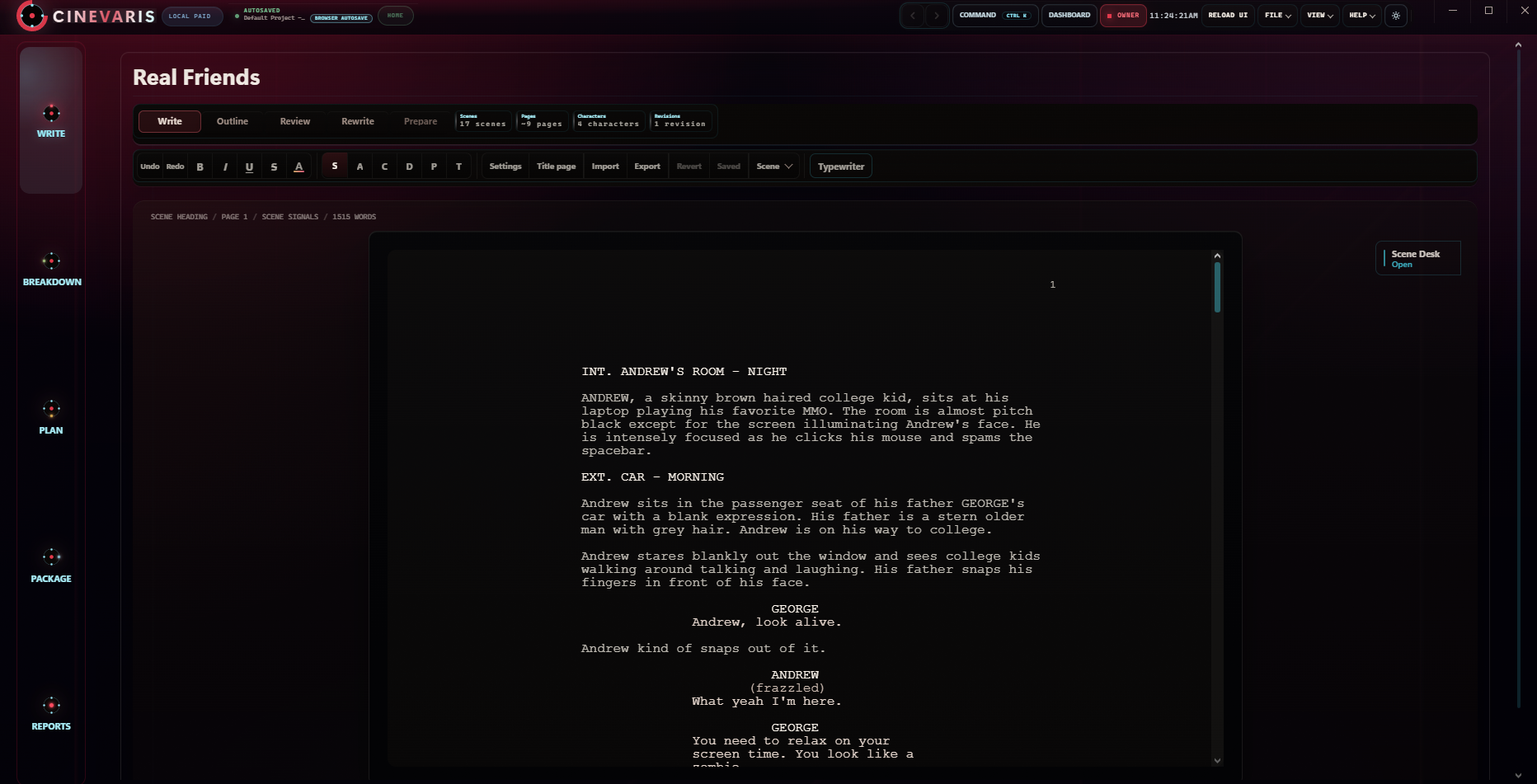
Cinevaris is being built so script notes, scene breakdowns, shot planning, production risk, and department context can stay in one focused workspace.