Build a first pass
List the scenes you want to shoot together, then choose their order. The spreadsheet starts blank; the field guide below explains what to add.
Script-To-Schedule Workflow
| Scene | Number, slugline, page count, place, and time of day |
|---|---|
| People | Who appears and when they are available |
| The setup | Light, sound, weather, access, travel, and anything unusual |
| Shoot day | The date and scene order you want to try |
| Alternative | Another scene or place you could use if the day changes |
Open the CSV in Excel or import it into Google Sheets. Use one row per scene and repeat the shoot-day label for scenes on the same day. Leave dates and call times blank until confirmed. Copy and Print keep the field guide, not a filled-in schedule.
CheckCheck cast availability, location access, travel time, and daylight before confirming the day.
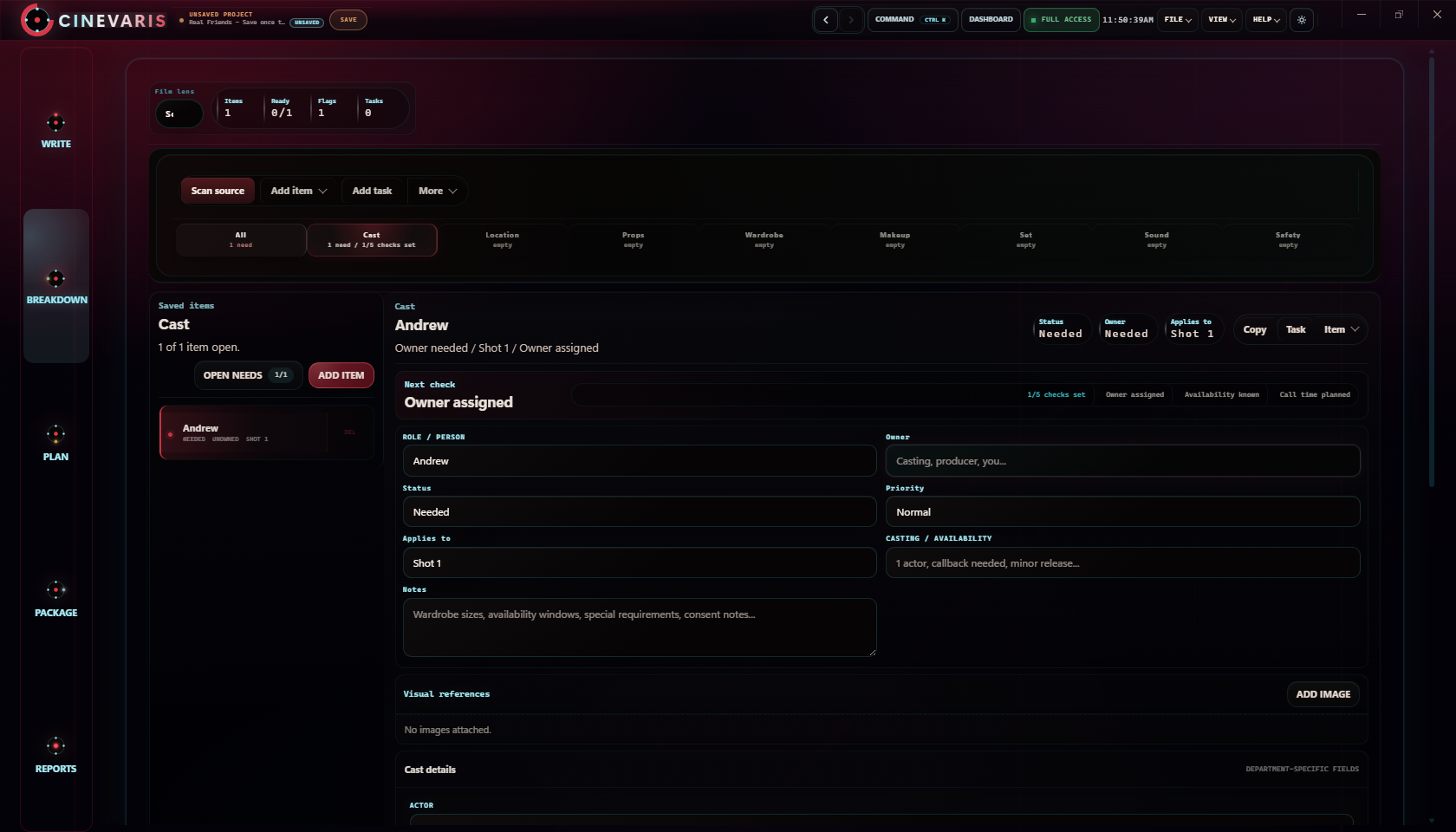
Arrange your shoot days in Cinevaris.
Cinevaris keeps the scene details, shot list, shoot days, and call sheet together while you find the plan that works.